
Strophariaceae
Wine Cap Mushroom
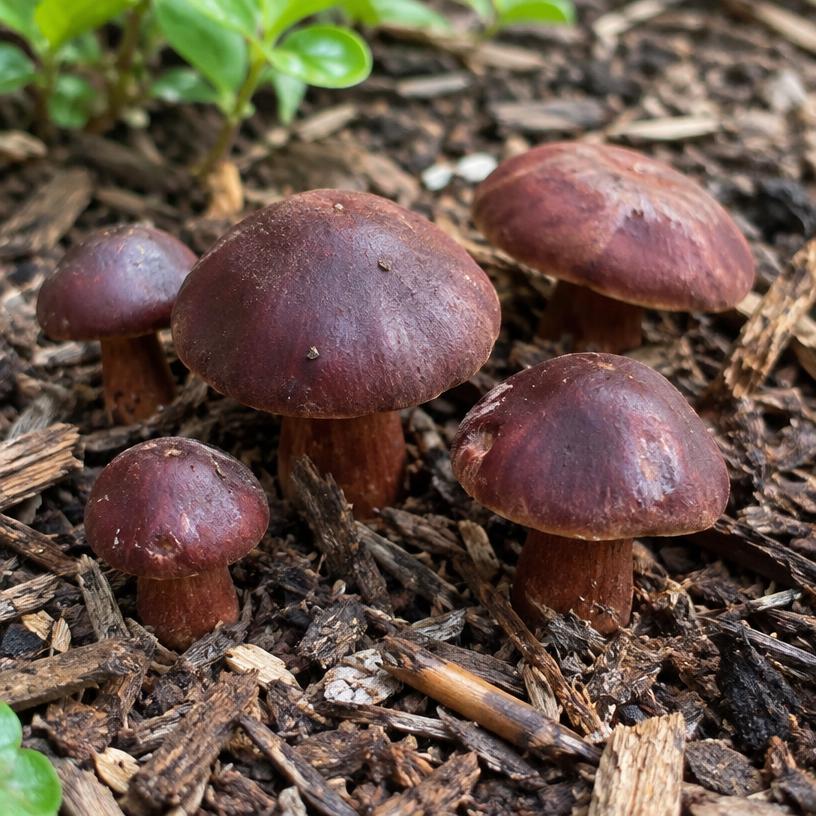
Start wine caps by layering purchased Stropharia rugosoannulata spawn into an outdoor bed of hardwood chips and straw. The decomposing substrate supplies nutrition without garden fertilizer; keep the bed evenly moist in partial shade, with fruiting following colonization during mild, damp weather.
- Sun
- Shade or indirect light; species-specific fruiting conditions
- Water
- Keep substrate moist, not waterlogged; provide humidity and fresh air
- Substrate
- Hardwood wood chips and straw in a shaded outdoor bed; use the supplier’s spawn-to-substrate ratio.
- First harvest
- Several months to a year
Tips
- Soak dry chips before building the bed and keep spawn covered with moist substrate.
- Water during dry spells so the bed stays damp beneath the surface, not swampy.
- Replenish hardwood chips as the bed decomposes and remove competing weeds without digging through the spawn.
- Pick firm young mushrooms before caps flatten, checking every cluster because unrelated fungi can colonize the bed.
- Use labeled edible spawn or a food-grade kit; never eat mushrooms based on this app or where they happen to grow. Have wild specimens confirmed by a qualified local expert and cook thoroughly.
Start with labeled species-specific spawn or a specialist kit only when you can maintain the supplier’s required colonization and fruiting conditions.
Wild mushroom safety
Never eat a mushroom you found in the wild unless its identity has been confirmed by a qualified local expert. Never rely on a single source — including this app, photos, or AI tools — to identify a mushroom. Some edible species have deadly look-alikes, and a mistake can be fatal. When in doubt, throw it out.
Good companions
—
Keep apart from
—