
Agaricaceae
Portobello Mushroom
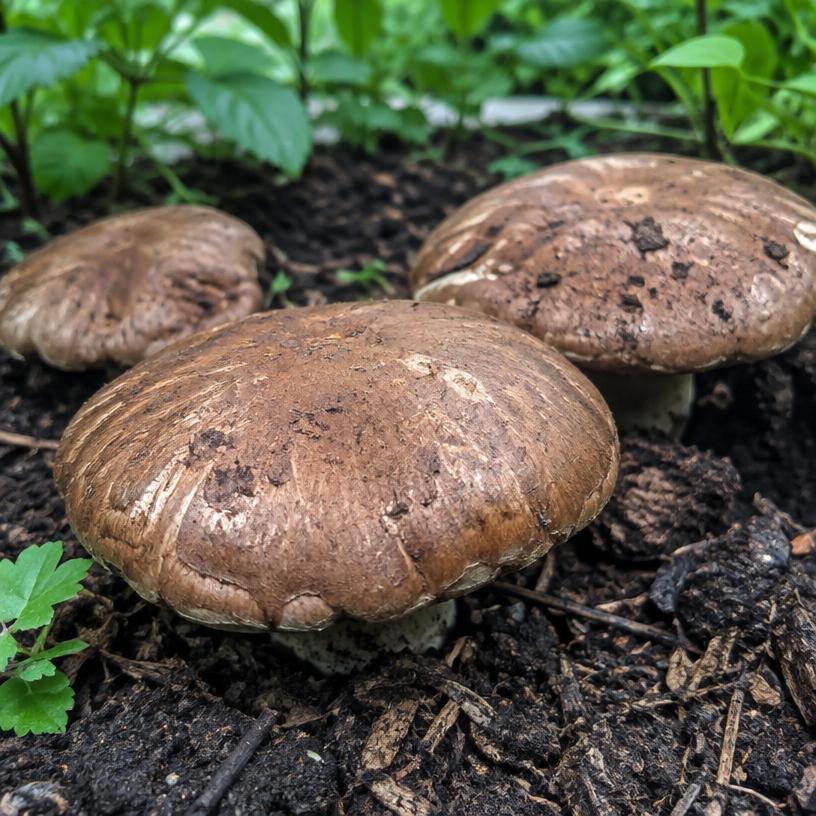
Portobellos are mature Agaricus bisporus grown most reliably at home from a prepared compost kit with its specified casing layer. Composted substrate supplies nutrition without garden fertilizer; keep the casing damp and follow the kit’s cooler fruiting temperatures, humidity, and ventilation instructions.
- Sun
- Shade or indirect light; species-specific fruiting conditions
- Water
- Keep substrate moist, not waterlogged; provide humidity and fresh air
- Substrate
- Prepared, composted manure-based substrate with a casing layer; use a reputable food-production kit.
- First harvest
- Kit-dependent; weeks to months
Tips
- Use prepared mushroom compost rather than raw manure or ordinary garden compost.
- Mist the casing as directed without flooding the substrate or soaking developing caps.
- Maintain supplier-specified ventilation and temperature, and discard kits with spreading colored mold.
- Harvest expanded caps with exposed dark gills for portobellos, or earlier closed caps for cremini.
- Use labeled edible spawn or a food-grade kit; never eat mushrooms based on this app or where they happen to grow. Have wild specimens confirmed by a qualified local expert and cook thoroughly.
Start with labeled species-specific spawn or a specialist kit only when you can maintain the supplier’s required colonization and fruiting conditions.
Wild mushroom safety
Never eat a mushroom you found in the wild unless its identity has been confirmed by a qualified local expert. Never rely on a single source — including this app, photos, or AI tools — to identify a mushroom. Some edible species have deadly look-alikes, and a mistake can be fatal. When in doubt, throw it out.
Good companions
—
Keep apart from
—