
Mulberry
Mulberry
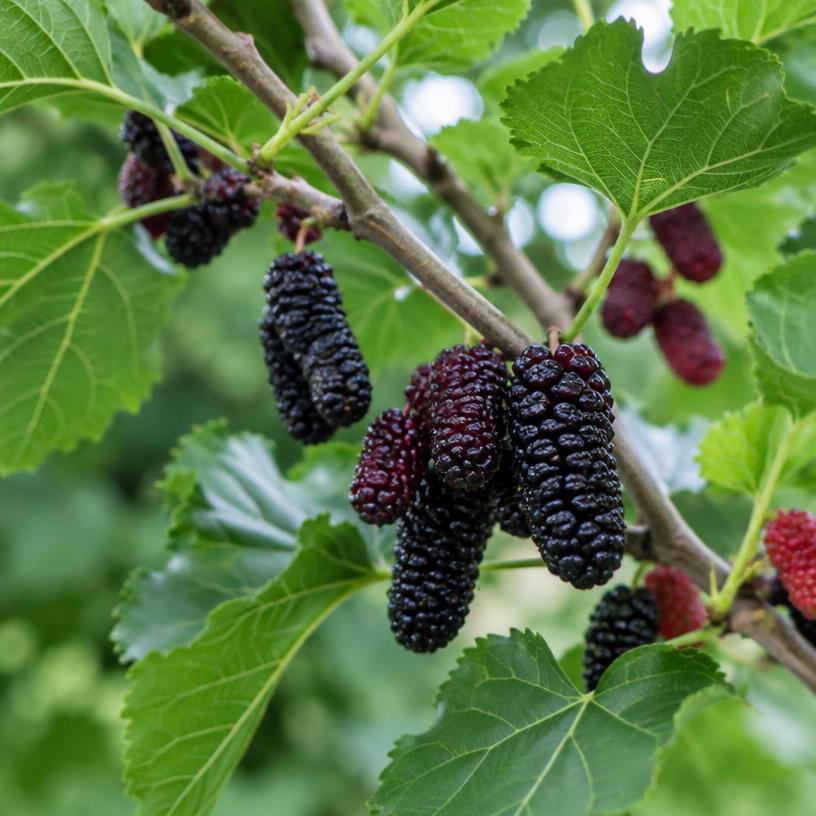
Mulberries grow best in deep, well-drained loam but tolerate a range of soils and usually need little fertilizer. Choose a locally suitable fruiting cultivar and spend the first few years developing a strong framework away from pavement stained by falling berries.
- Sun
- Full sun
- Water
- Water deeply during establishment; adjust to rainfall and soil
- Spacing
- 240 in
- First harvest
- 3–5 years
Tips
- Choose a named, self-fruitful cultivar and leave room for its mature canopy.
- Water young trees deeply through dry spells and mulch without touching the trunk.
- Use a soil test before feeding; excessive nitrogen creates vigorous shoots rather than better fruit.
- Prune lightly during dormancy and avoid large cuts that decay readily.
- Spread a clean sheet beneath the tree and collect ripe berries that release easily, removing fallen fruit that attracts pests.
Plant nursery stock in spring, or in fall where winters are mild, keeping the root flare at soil level and any graft above soil.
Wild foraging safety
This plant is often found growing wild. Never eat a wild plant unless its identity has been confirmed by a qualified local expert, and never rely on a single source — including this app, photos, or AI tools — to identify it. Many edible plants have toxic look-alikes, and some parts or preparation stages may be unsafe. When in doubt, don't eat it.
Good companions
Chives, Garlic, Borage
Keep apart from
—