
Hericiaceae
Lion’s Mane Mushroom
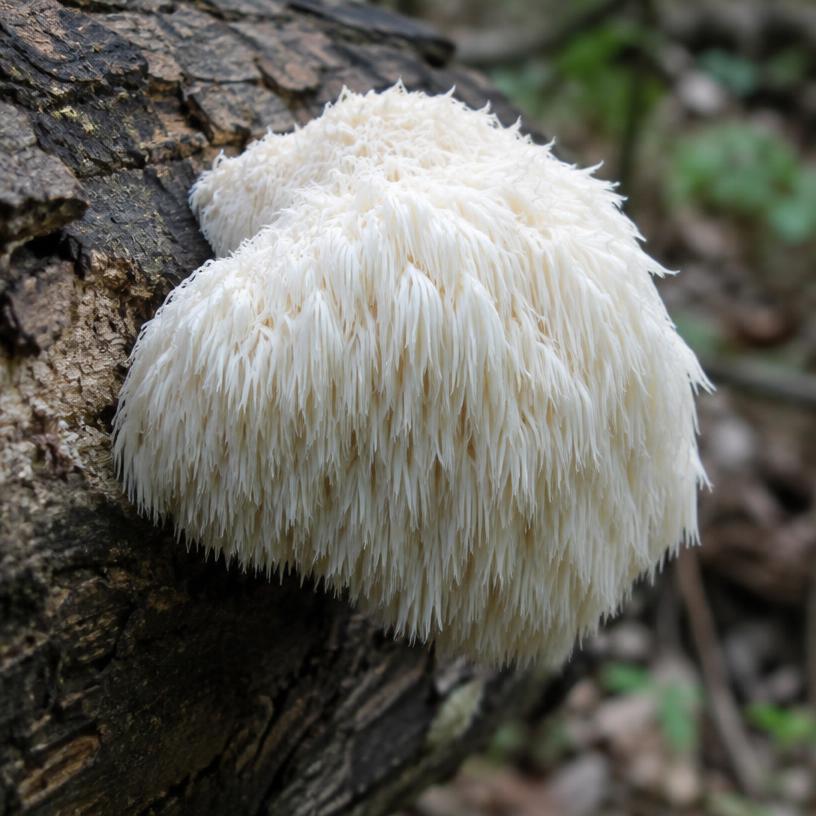
Start lion’s mane with a ready-to-fruit hardwood-sawdust block; inoculated hardwood logs are a slower outdoor alternative. Wood-based substrate supplies food without fertilizer, while fruiting requires high humidity, gentle fresh-air exchange, indirect light, and temperatures matched to the strain.
- Sun
- Shade or indirect light; species-specific fruiting conditions
- Water
- Keep substrate moist, not waterlogged; provide humidity and fresh air
- Substrate
- Prepared hardwood sawdust, or suitable hardwood logs such as oak or beech; follow kit opening instructions.
- First harvest
- Kit-dependent; logs take longer
Tips
- Open only the fruiting area directed by the supplier to limit block drying.
- Maintain humid air without spraying the developing teeth heavily or leaving standing water.
- Improve ventilation if growth becomes branched and coral-like, and discard visibly contaminated blocks.
- Cut off firm white clusters as teeth lengthen, before yellowing or softening.
- Use labeled edible spawn or a food-grade kit; never eat mushrooms based on this app or where they happen to grow. Have wild specimens confirmed by a qualified local expert and cook thoroughly.
Start with labeled species-specific spawn or a specialist kit only when you can maintain the supplier’s required colonization and fruiting conditions.
Wild mushroom safety
Never eat a mushroom you found in the wild unless its identity has been confirmed by a qualified local expert. Never rely on a single source — including this app, photos, or AI tools — to identify a mushroom. Some edible species have deadly look-alikes, and a mistake can be fatal. When in doubt, throw it out.
Good companions
—
Keep apart from
—