← All plants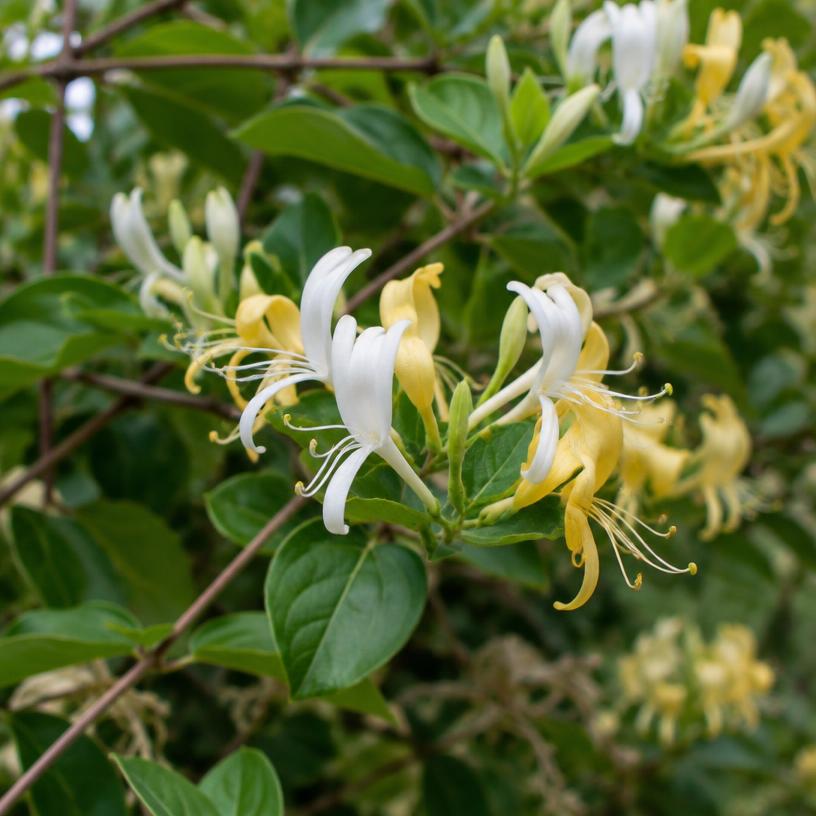
🌸
Honeysuckle
Honeysuckle Flowers
Do not plant Japanese honeysuckle for food: Lonicera japonica is invasive, and the podcast’s unspecified honeysuckle is not a safe species identification. Established vines tolerate many well-drained soils and need no supplemental fertilizer; management should prioritize containing or removing them rather than encouraging growth or establishing a crop.
- Sun
- Full sun to part shade
- Water
- Established vines tolerate some dryness
- Spacing
- Invasive vine; planting discouraged
- First harvest
- Existing verified flowers only
Tips
- Do not plant or propagate Japanese honeysuckle; check local invasive-plant rules.
- Do not irrigate or fertilize invasive vines to boost flowering; protect desirable nearby plants during removal.
- Cut back and monitor regrowth using local invasive-plant control guidance, removing material before berries spread.
- Never substitute unidentified honeysuckle species. Do not eat berries or foliage.
- Only consider unsprayed flowers from existing, professionally identified Lonicera japonica; this app cannot identify safe flowers. Honeyberry is a separate edible-fruited species.
No planting dates: Japanese honeysuckle is invasive. Do not plant it for food; native habitat alternatives are not automatically edible substitutes.
Good companions
—
Keep apart from
—