
Moschatel
Elderberry
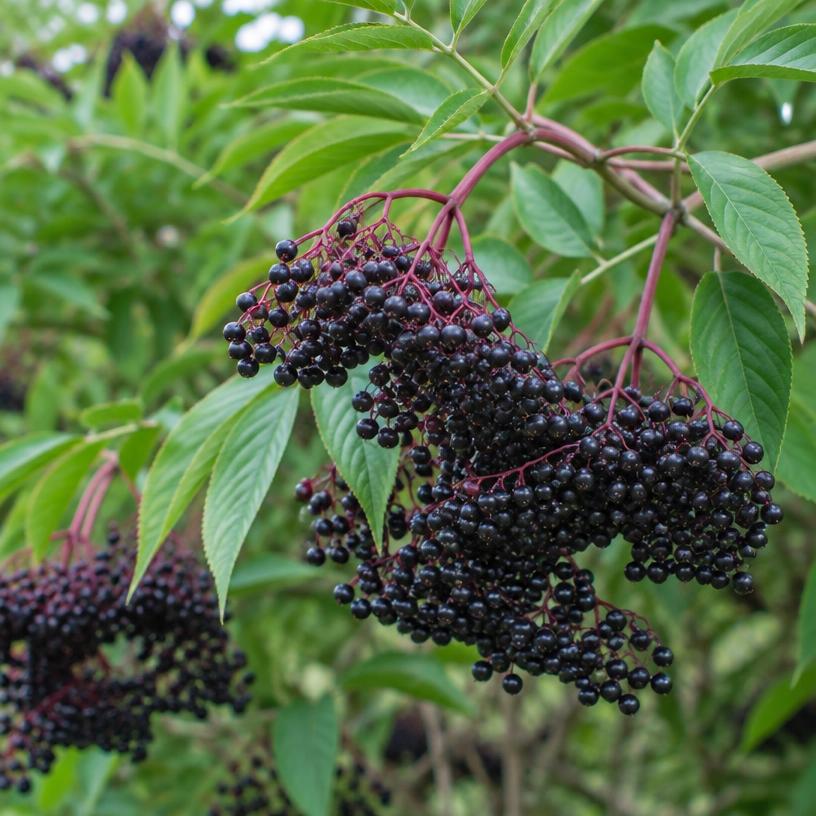
Elderberries grow best in fertile, moisture-retentive soil near pH 5.5-6.5, though they still need drainage around the roots. Add compost and moderate spring nitrogen, allow room for suckers, and grow compatible cultivars for reliable yields.
- Sun
- Full sun
- Water
- Water deeply during establishment; adjust to rainfall and soil
- Spacing
- 72 in
- First harvest
- 2–3 years
Tips
- Plant edible nursery cultivars 6-10 feet apart and use two compatible selections with overlapping bloom.
- Water regularly during establishment and dry spells, using mulch to keep shallow roots moist.
- Feed according to a soil test in spring and remove dead or damaged canes while plants are dormant.
- Limit harvest during establishment, then cut whole clusters when berries are fully colored; remove fruit promptly to reduce bird and insect losses.
- Choose edible cultivars; cook ripe berries and never eat leaves, stems or unripe fruit.
Plant dormant rooted cuttings or bare-root plants in early spring, or container-grown edible cultivars in spring.
Wild foraging safety
This plant is often found growing wild. Never eat a wild plant unless its identity has been confirmed by a qualified local expert, and never rely on a single source — including this app, photos, or AI tools — to identify it. Many edible plants have toxic look-alikes, and some parts or preparation stages may be unsafe. When in doubt, don't eat it.
Good companions
Mint, Garlic, Borage
Keep apart from
—