
Fomitopsidaceae
Chicken of the Woods
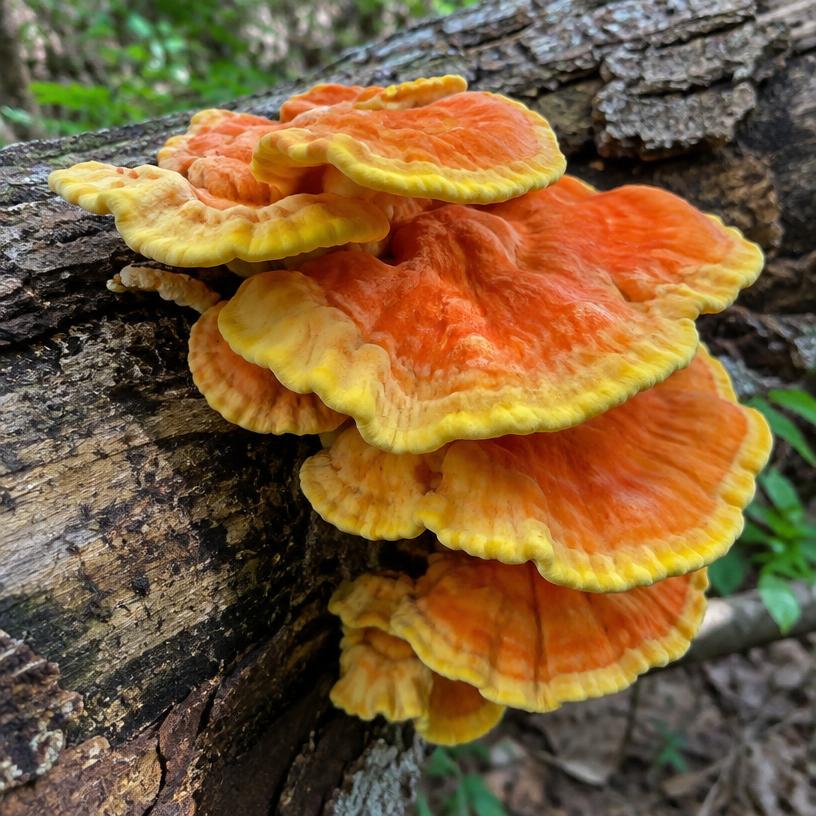
Chicken of the woods is mostly wild-foraged; specialist growers sometimes inoculate prepared hardwood logs with a host-matched Laetiporus strain, but results are unreliable. The wood supplies nutrients without fertilizer, and outdoor fruiting needs established decay, moisture, and suitable warmth rather than a predictable garden schedule.
- Sun
- Shade or indirect light; species-specific fruiting conditions
- Water
- Keep substrate moist, not waterlogged; provide humidity and fresh air
- Substrate
- Mostly wild-foraged wood-decay fungi on oaks and other hardwoods, with some species on conifers; experimental cultivation uses species-matched dead logs, not living trees.
- First harvest
- Variable; no dependable date
Tips
- Obtain species-identified spawn and follow a specialist protocol rather than inoculating garden trees.
- Keep experimental logs shaded and moist without waterlogging, and do not add fertilizer.
- Take only tender, actively growing margins after expert identification; older tissue becomes tough.
- Even correctly identified, thoroughly cooked mushrooms may cause reactions; try a small portion first.
- Use labeled edible spawn or a food-grade kit; never eat mushrooms based on this app or where they happen to grow. Have wild specimens confirmed by a qualified local expert and cook thoroughly.
Start with labeled species-specific spawn or a specialist kit only when you can maintain the supplier’s required colonization and fruiting conditions.
Wild mushroom safety
Never eat a mushroom you found in the wild unless its identity has been confirmed by a qualified local expert. Never rely on a single source — including this app, photos, or AI tools — to identify a mushroom. Some edible species have deadly look-alikes, and a mistake can be fatal. When in doubt, throw it out.
Good companions
—
Keep apart from
—