Cantharellaceae
Chanterelle
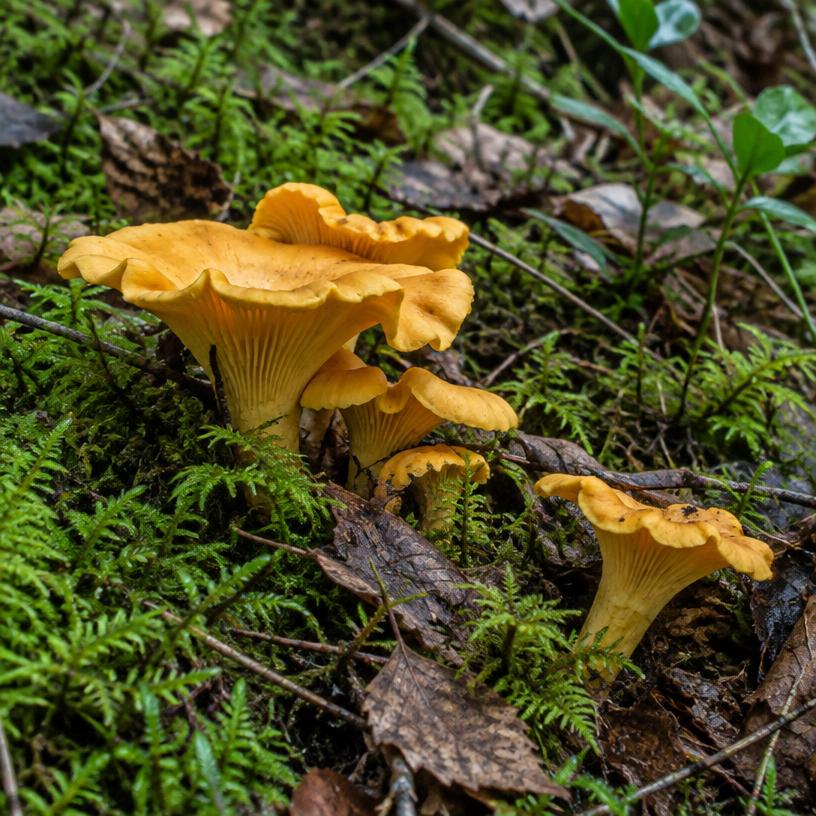
Chanterelles are mostly wild-foraged mycorrhizal fungi that depend on living tree roots, not dependable home kits or fertilized mushroom beds. Establishing them experimentally requires a compatible inoculated host tree and years of uncertain development; fruiting usually follows seasonal rains in suitable woodland temperatures.
- Sun
- Shade or indirect light; species-specific fruiting conditions
- Water
- Keep substrate moist, not waterlogged; provide humidity and fresh air
- Substrate
- Mostly wild-foraged mycorrhizal fungi with living oaks, beeches, pines, hemlocks, or other regional hosts; no reliable home substrate-bed method.
- First harvest
- Wild fruiting; no garden estimate
Tips
- Preserve host trees and leaf litter rather than spreading spores with expectations of a quick crop.
- Avoid soil compaction, heavy fertilizer, and drainage changes around woodland host roots.
- Dangerous lookalikes exist; color and an app picture cannot establish edibility.
- Collect only expertly verified, firm specimens and leave decaying or uncertain mushrooms untouched.
- Use labeled edible spawn or a food-grade kit; never eat mushrooms based on this app or where they happen to grow. Have wild specimens confirmed by a qualified local expert and cook thoroughly.
No reliable home planting method is available; preserve existing host-tree habitat rather than buying purported quick-fruiting kits.
Wild mushroom safety
Never eat a mushroom you found in the wild unless its identity has been confirmed by a qualified local expert. Never rely on a single source — including this app, photos, or AI tools — to identify a mushroom. Some edible species have deadly look-alikes, and a mistake can be fatal. When in doubt, throw it out.
Good companions
—
Keep apart from
—